
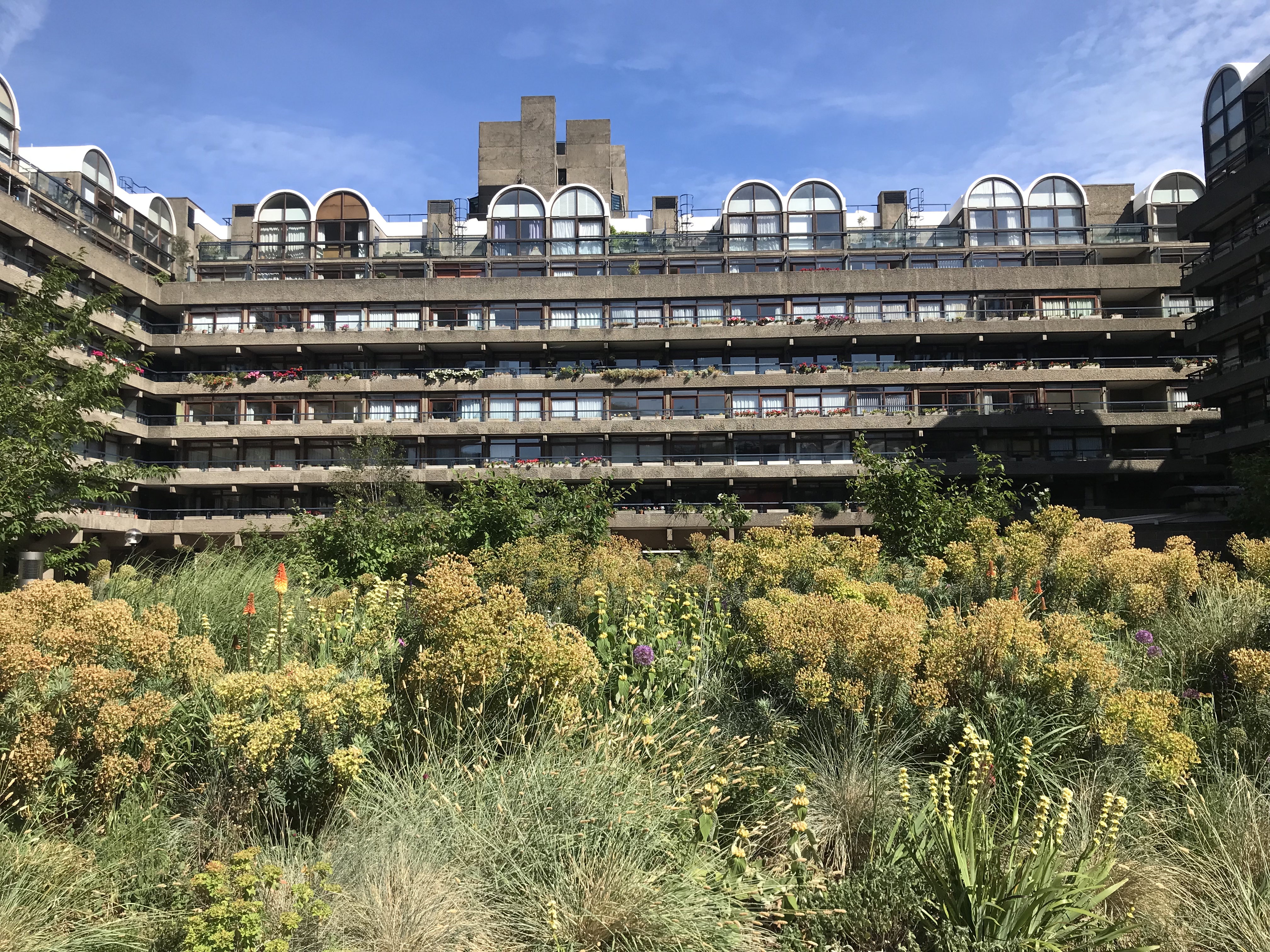
“Described by Queen Elizabeth as one of the modern wonders of the world, the Barbican Estate in London is one of the largest examples of the Brutalist style and represents a utopian ideal for inner-city living. The post-war complex was designed in the 1950s by British firm Chamberlin, Powell and Bon – a team of three young architects who had recently established their reputation by winning the the 1951 design competition for the nearby Golden Lane Estate. With its coarse concrete surfaces, elevated gardens and trio of high-rise towers, the Barbican Estate offered a new vision for how high-density residential neighbourhoods could be integrated with schools, shops and restaurants, as well world-class cultural destinations. The architects – Peter Chamberlin, Geoffry Powell and Christoph Bon – sought to create a complex that created a clear distinction between private, community and public domains, but that also allowed pedestrians as much priority as cars. Architect Piers Gough, who cites the Barbican as one of his biggest influences, told Dezeen that the project’s “terrific complexity” is what makes it so unique.“
(Amy Frearson, in Dezeen, 13 September 2014: https://www.dezeen.com/2014/09/13/brutalist-buildings-barbican-estate-chamberlin-powell-bon/)
This year, we are running the graduation design studio London!
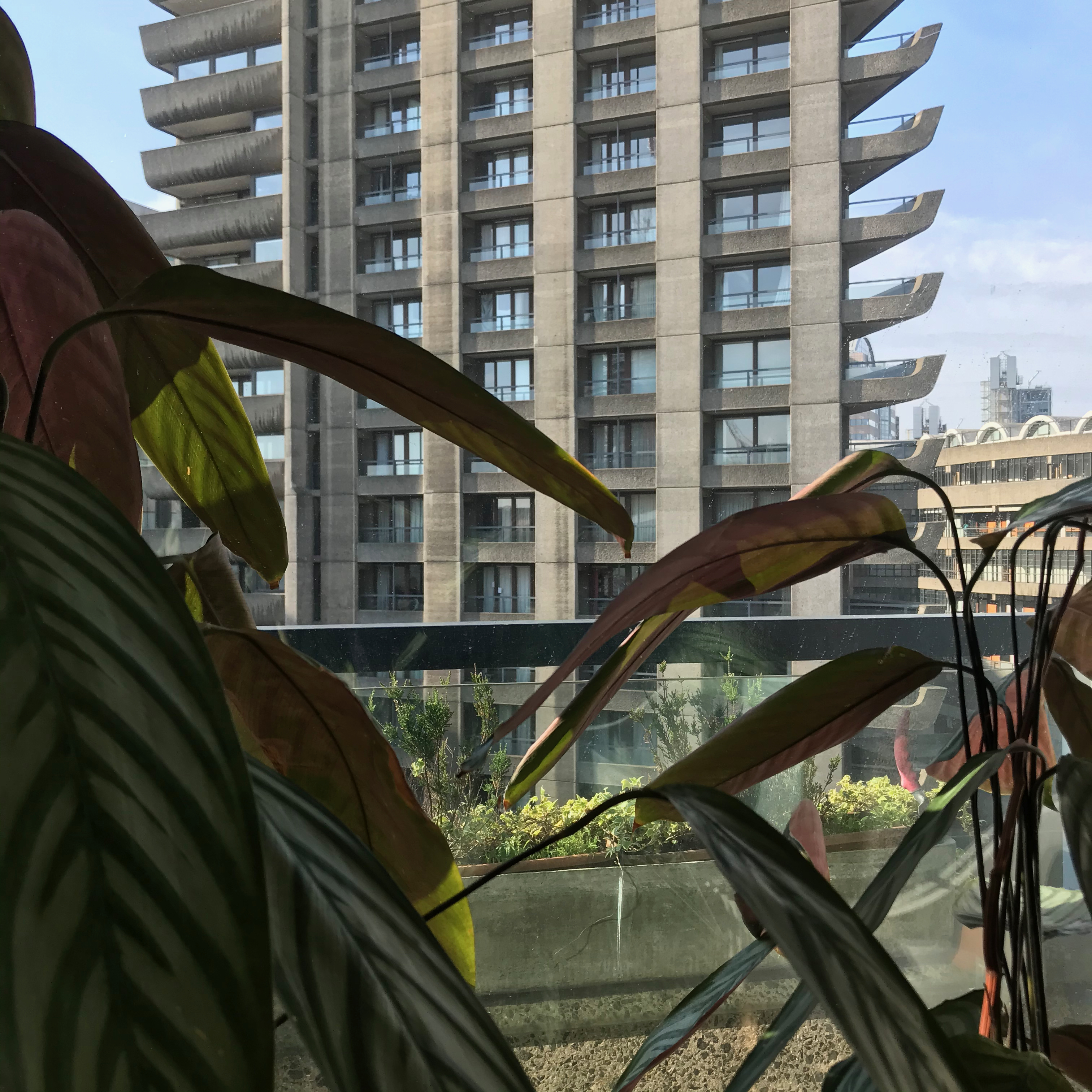
The chosen context for the development of the master dissertations is the Barbican complex, central London, United Kingdom.
Barbican is part of the Grade II listed Barbican complex, which was built on Blitz ruins from 1965 and is now recognized as a modern classic of brutalist architecture. A paean to ‘utopian living’, mixed towers and terrace blocks, many raised on columns, overlook lakes and lawns and a maze of high-walks. The complex is “a city within a city” and includes around 2100 residential flats, offices, secondary schools as well as art schools, an art centre, a library, theatres, an independent cinema complex, art galleries, design shops, concert halls, restaurants, bars, exhibition halls, winter gardens etc. The complex was built to keep residents in post-war central London, offering them all facilities within walking distance. Most of the project is made accessible through meandering pedestrian platforms (similar to the Peter and Alison Smithson’s Berlin Haupstadt project with its system of elevated pedestrian platforms).
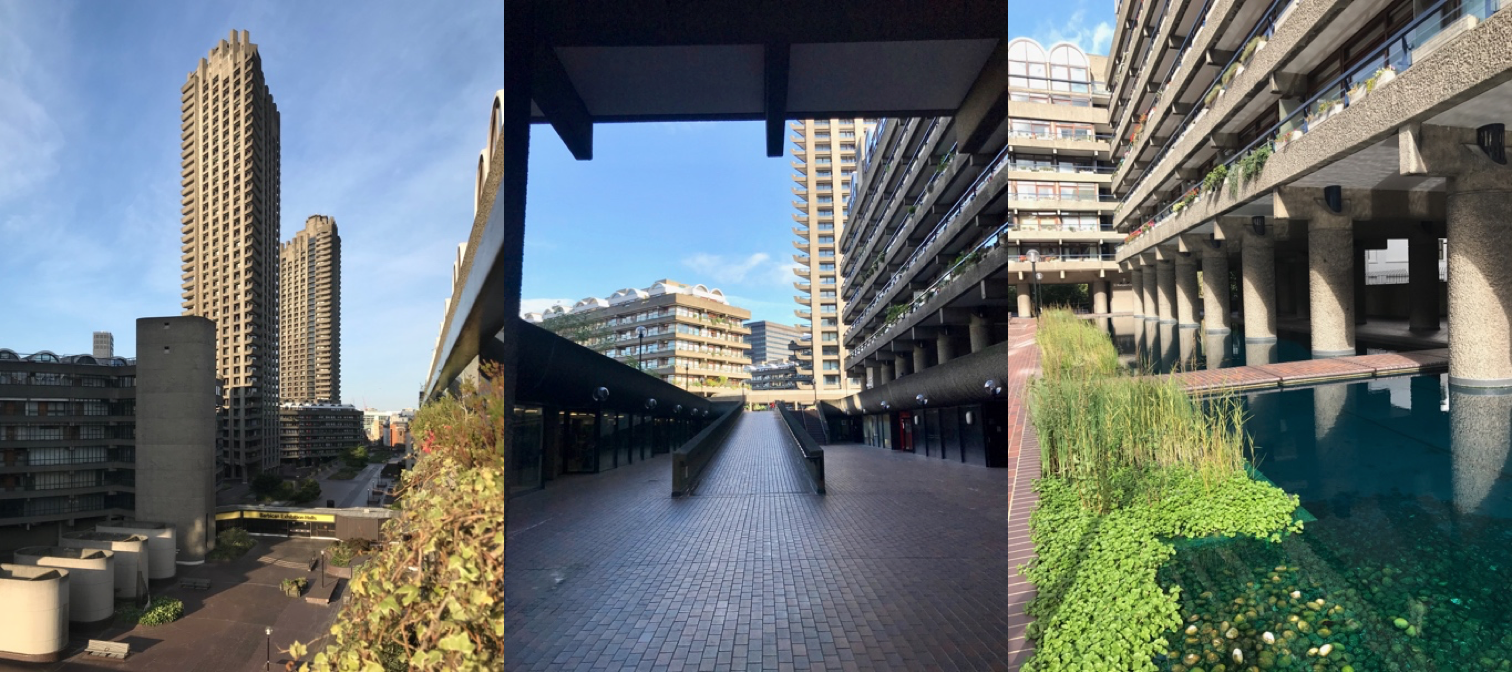
Its main platform (see images above) connects many entrances to residential towers and other commercial and cultural facilities while covering up a vehicle-based tunnel that connects the City with the Barbican tube and Farringdon train station, has never been without controversy. It is now under discussion again as it needs renovation, as traffic is reduced in the area (ULEZ zone) and as the tunnel or platform not always feels pleasant or comfortable, despite the attraction it has for architects, fashion photo shoots, outdoor film sets, skaters’ activities etc.
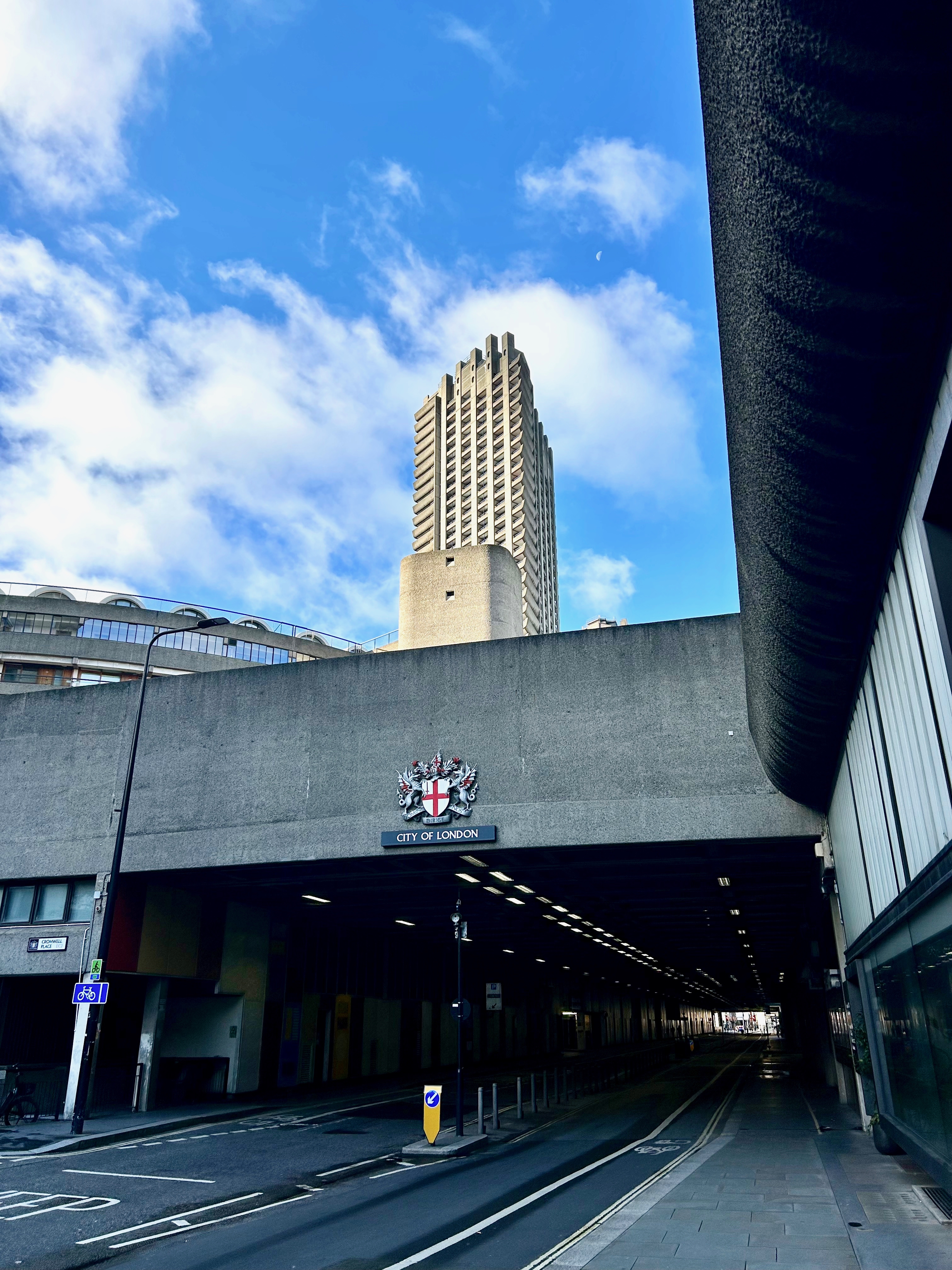
The master dissertations will look into architectural ways of “updating” this platform and tunnel. Some main questions pop up here, to be considered the starting point of the design studio. Do we keep the tunnel or do we open the platform? Do we need more activities on the lower level or on the pedestrian level? In case we do, how do we add them to this listed complex? How do we respond to the brutalist language in the complex? How do we involve the local stakeholders and communities?

The main purpose of this design studio is to propose “a new Barbican streetscape” through architectural interventions (a new art gallery?, relocate the library?, add retail to the tunnel?, add artist studios to the platform?, …) while taking into account recent social, economic, environmental issues that change the way we inhabit or use this complex?
The projects in this studio will start from studying and rethinking the city’s streetscapes, but it is not an “urbanistic” or “landscape” design studio: the focus will be on developing contextual and critical architecture interventions (buildings and related streetscapes, not installations) that are unfolded at multiple scales. The projects will take into account their position and role in a broader urban framework, pronounce a discourse on productive neighbourhoods, and will be detailed till the level of the interior spaces while defining materiality in a multi-scalar manner.
We will look for the real deal, not mere representations of it. And we will keep you updated!
 Streetscape Territories